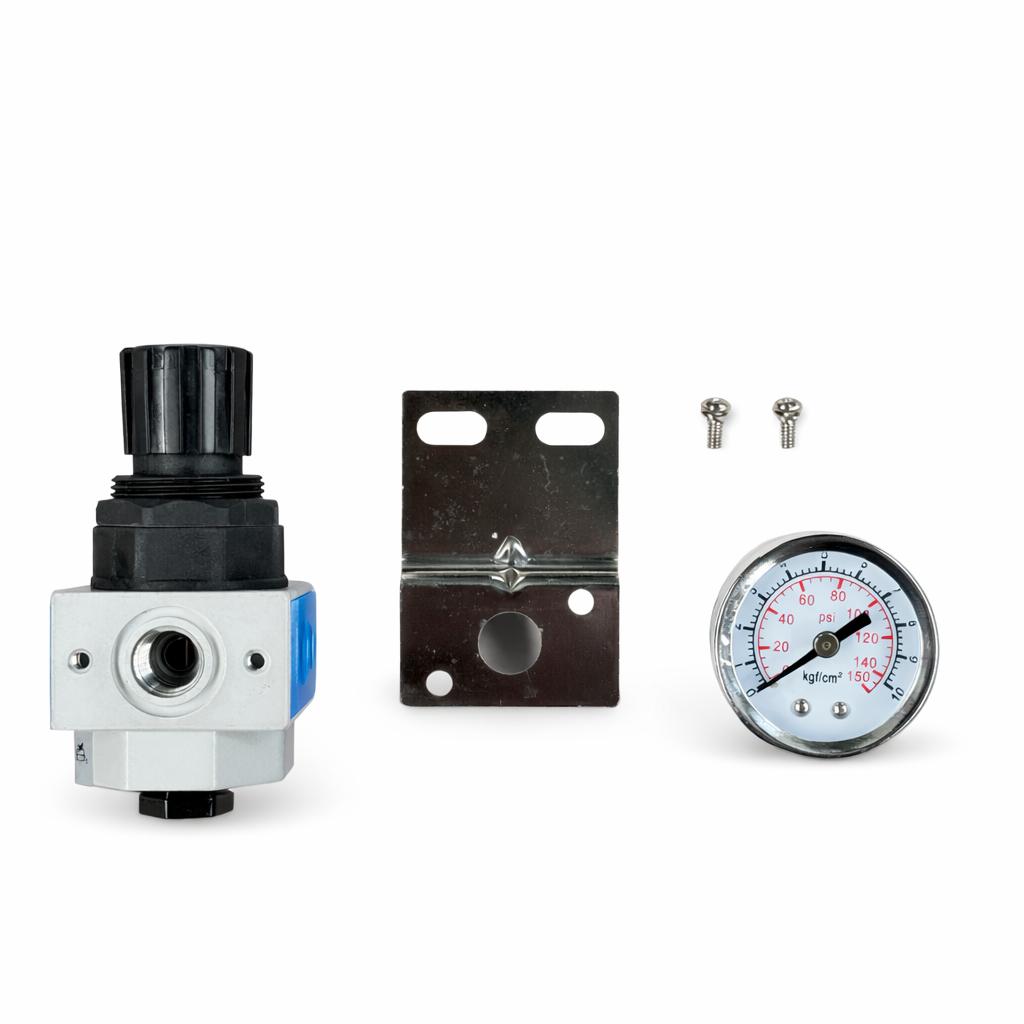
Part Code: ASAB-PFR1/4-49
Introducing the ASAB Pneumatic Regulator — a compact, reliable pneumatic regulator designed to deliver stable, adjustable outlet pressure for workshop and site air systems. Ideal for point-of-use air control, it helps keep downstream tools and equipment running consistently by smoothing out supply fluctuations and preventing over-pressure.
With 1/4" BSP ports, the ASAB-PFR1/4-49 suits common Australian pneumatic plumbing and is a handy fit for air boards, benches, spray equipment, and diaphragm pump air feeds where you want dependable control in a smaller format. Rated to 150 PSI, it’s built for everyday compressed air applications where accurate pressure management matters.
Whether you’re replacing a regulator that won’t hold pressure, setting up a tidy air control station, or standardising fittings across the workshop, the ASAB Pneumatic Regulator is a practical, job-site-ready solution for dependable air regulation.
Key Benefits
-
Rated to 150 PSI for common compressed air applications
-
1/4" BSP ports for standard Australian pneumatic connections
-
Provides stable, adjustable outlet pressure for consistent equipment performance
-
Helps protect downstream gear from pressure spikes and fluctuations
-
Ideal for point-of-use regulation on benches, air boards, and equipment feeds
-
Compact format suits tight installs and service panels
-
Durable construction for workshop and job-site use
What’s Included
-
ASAB Regulator 1/4" BSP (150 PSI) – 49 — ASAB-PFR1/4-49
Safety Check
-
Isolate and depressurise first: Shut off air supply, bleed the line fully, and confirm pressure is at zero before installation.
-
Confirm thread type: Ensure mating fittings are 1/4" BSP (do not mix BSP with NPT).
-
Use correct sealing method: BSPP typically seals with a bonded seal/washer; BSPT seals on the thread taper—match your fittings accordingly.
-
Install in correct flow direction: Follow IN/OUT markings (if present) to ensure proper regulation.
-
Pressure up gradually: Bring air pressure up slowly and leak test with soapy water—don’t check leaks with your hands near pressurised joints.
-
Stay within ratings: Make sure the regulator and downstream components are rated for the intended working pressure.